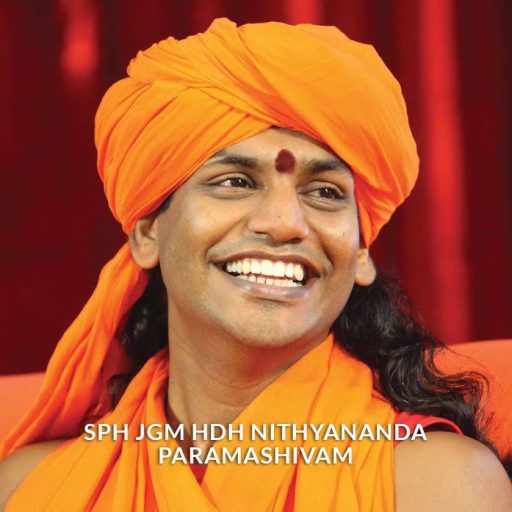
There is no other book that is so clear, so direct. There is no other Master who is so straight in giving the Truth and the experiential expression of the Truth.
After all the explanations given by Kṛṣṇa, Arjuna continues to ask, ‘Oh Kṛṣṇa, first of all, you asked me to renounce work and then again you recommend work with devotion. Now, will you kindly tell me clearly, which one of the two is more beneficial?
yac chreya etayor ekaṁ tanme brūhi suniścitam (5.1).’
We will never get an answer or solve a problem if we start thinking about which would be more beneficial. Before we evaluate the benefits of something, we should be clear about the scale we want to use to measure the benefits. What is beneficial for one person may be completely useless for another. The scale that we use for measuring success is a very important thing. Unless we know the scale, it does not make sense to conclude anything. Even jumping to a conclusion should be done with clear intelligence and completion. Jumping to a conclusion without intelligence is like falling out of an airplane without a parachute! We just wouldn’t know where we will land.
Before measuring life in terms of success or failure, one should know how this success is to be measured in the first place. If we are going to measure our life on a scale of dollars, then we have to work only for dollars. So, from morning to evening, we need to work only for that goal. Based on this, we can conclude whether we are succeeding or failing in our life. But you see, by the time we reach the end of the day, the very scale changes! We start our life using a certain scale and after a few years we measure it again using a totally different scale.
It is fortunate that the scale changes with maturity. If we grow with every mistake in life and complete with it, then the scale with which we measure success in life should also change. If it does not change, we will start our next life from ground zero. It is an endless game unless we learn lessons and move on. If the scale with which we measure our success changes in the right way, it shows we are becoming mature. If the scale stays in the same level of dollars and wealth, not only will we be unable to measure our life clearly but we will also attract unhappiness and incompletions. This is because there is no end to accumulating money or any material wealth. First of all, we set high standards for ourselves. Even if we achieve these, we are not successful in our own eyes because we would have extended our target by comparing ourselves with others. Out of greed we keep saying ‘What next, what next’. There is no end to this.
At the end of our lives, we feel we have not done enough. Again we start a whole new game of birth and life with the same incompletions, same limited maturity. Listen! If money and worldly comfort alone is our scale, again and again we will feel we did not do enough and that we missed out in life. There is no absolute scale that defines success, especially in monetary terms. For any amount of money that we have, we would be happier with a dollar more.
Let me tell you a small story:
A king’s barber used to live a very happy life. Every morning he would go to the palace, do his work and the king would give him ten gold coins. He led a happy and peaceful life without any worries. One day when he was returning from the king’s palace, suddenly, he heard a booming voice, ‘Dear son, do you want forty gold coins?’ The barber said, ‘Forty gold coins? What am I going to do with them? My expense is ten gold coins and that is enough. I don’t need anything more.’ The booming voice said, ‘I will give you twenty-four hours to think. You can go home, think about it, come back tomorrow and tell me. If you decide that you want them, I shall give you a magical jar full of gold coins.’ This poor barber went and said this to his wife! She started to scream, ‘You fool! Don’t you have any sense? You should have brought that jar. She raved and ranted, ‘All my life, I am wearing the same clothes and jewelry. You have never taken me on a vacation. What have I enjoyed after marrying you?’ When she started shouting at him, the barber said, ‘Alright, fine. Don’t worry. The booming voice has given me time till tomorrow morning. Tomorrow, I will talk to him and get the jar.’ The next day morning, he told the voice, ‘Please give me that jar.’ Immediately, a yakṣa (an astral being) appeared before him and said, ‘Have this jar. This jar has got 990 gold coins, just 10 gold coins less than 1000.’ The guy brought the gold jar back to the house. He was very happy that he could spend it for at least 99 days if he spent ten coins per day. But the moment his wife got the jar, she said, ‘What is this? The jar is not overflowing. There is something missing.’ He said, ‘I don’t know. This is the way I got the jar. The yakṣa told me that it is a little less.’ She started worrying, ‘Had it been full, how nice it would have been!’ The next day, when the barber came back, she hurriedly grabbed all the ten gold coins for that day and put them in the jar. She wanted the jar to overflow. But to her surprise, again the level in the jar was not full. The barber’s wife now waited anxiously for the next day’s wages to fill the jar. The next evening, again, she took the money from the barber and put them into the jar. Again, it was almost full but not completely full. This went on continuously for a week. She stopped giving the barber food and cut all expenses. She took away all the gold coins from him and desperately waited to see the jar overflow. In one week’s time the barber had become tired and dull.The king started enquiring, ‘What happened? You used to look so fresh. You have started worrying. What happened to you? Did you accept the yakṣa’s jar?’The barber was shocked at hearing this. He said, ‘Oh king, how do you know?’The king said, ‘Whoever is suffering in this country, all of them have one thing in common. They accepted the yakṣa’s jar at some point in time. When you go back home, get rid of the yakṣa’s jar if you wish to be happy again.’The man did so and lived in completion, happily and blissfully again from that day on.
What the king said applies to all of us. Go back home and see if you have yakṣa’s jar or not, and if you do, complete with it. If you are worrying, if you are suffering with incompletions, there is every chance that you have the yakṣa’s jar of incompletions in your house. The yakṣa’s jar never gets filled, it is always incomplete!
Of course, when I say yakṣa’s jar, I mean it may not literally be there in your house. But it will surely be there in your head as incompletions. Sometimes yakṣa hands over the jar in the form of a bank balance. Sometimes he hands it out as knowledge. Sometimes he hands it out as name and fame! It may be in your mind, in your inner space sitting as complicated patterns, as incompletions claiming over your own power.
Listen! Yakṣa’s jar is made out of the Brahmakapāla—meaning one of Lord Brahma’s heads that Lord Śiva, in the form of Māhākāla, destroys. Mahādeva assumes the form of Kālabhairava to destroy the incompletions of Brahma. Brahma once got into the hypocritical incompletion of thinking he is Sadāśiva. Sadāśiva had five heads, Brahma also had five heads. But Brahma forgot that Sadāśiva had one more space in Him, which is called AdhoMukha—the Superconscious, Enlightenment, avyakta—the unmanifested. Brahma had not realized his unmanifested side. So he suddenly started behaving like Mahādeva, saying, ‘So what? I have five faces. He also has five faces.’
Mahādeva then took the form of Māhākālabhairava and removed one of Brahma’s heads. Once Mahādeva removed the head, Brahma automatically settled into the space of completion. But all the incompletions of Brahma were stuck in Mahādeva’s hand in the form of that Brahmakapāla or skull, which simply swallows anything that is put into it and asks for more. Then, Devi offered food to that skull and completed it. Viśveshvara, Viśvanātha became Kālabhairava to complete Brahma. Mahādevi became Annapūrni (mother who bestows completion with food) to complete the Brahmakapāla.
Understand the truth from this powerful happening! The yakṣa’s jar is the head of Brahma that makes us feel that we are not enough, that we are not complete, that we are not powerful and joyful. Our head makes us continuously feel powerless, insecure that we are not enough unto ourselves and we are not complete.
On one side, no matter how much we have, in ten days, we feel it is not sufficient. In ten days, Brahma’s head, our incomplete mind, will take everything for granted. On other side, it makes us cunningly believe that we know, when we don’t know.
Yakṣa refers to an incomplete, powerless person with complicated patterns, who has wealth and the power of completion but neither does he enjoy his powerful space nor does he enrich to share it with the world. In India, they keep a few dogs in many agricultural fields. The dogs will neither eat the grains nor will they allow other animals to come and eat. In the same way, if we have the power of completion and enriching, and we neither enjoy nor share it with others, we are called a yakṣa.
One of the biggest problems is, in spite of reminding you again and again, you put all your energy to support your incompletions saying ‘If I don’t support my incompletions, people will exploit me because others are in incompletion.’ If you feel insecurity, be very clear, you have already become Brahma. Now you need Kālabhairava to happen in you. Any form of insecurity is Brahma. Remove that insecurity and incompletion from your life. Be like Kālabhairava when you have to complete with all your incompletions, because your incompletion always behaves like Brahma. Even though it does not know, it acts as if it knows.
When accumulation of wealth or knowledge is done greedily, there is never an end, like the yakṣa’s jar, because there is always scope for more. And secondly, when one is so preoccupied about accumulating, completion and joy never happens. The greed of wanting more and more power and the fear of losing the power hinders the true power and joy of the wealth. Why are we accumulating possessions if we do not stop and enjoy them?
I tell you, Kālabhairava is power and joy. These two qualities complete all your incompletions. All your incompletions will be complete. Your very DNA should be programmed with the space of Kālabhairava, power and joy! Mahākālabhairava is embodiment of power and joy! Only power and joy brings completion and keeps you alive, awake, aware.
I always tell people, ‘Either you do dāna (charity) or you achieve mahādāna (the final and grand sacrifice or death). If you do dāna, you share some of your completion while also enjoying and enriching yourself. You will be enriched and so will others. If you don’t do some dāna, you will achieve mahādāna. This means you will leave everything and go away carrying the mahādāna of your incompletions once and for all when you die.
Ramaṇa Mahaṛṣi says beautifully, ‘Before achieving it, even a mustard seed will look like a mountain.’ It will seem like your life will not move without it. It will seem like it is the basic and most important thing for your life. ‘Once you achieve it, even a mountain will look like a mustard seed.’ This is because something else looks like a mountain now. We get caught in the trap of achieving, and lose the ability to relax and enjoy what we have achieved.
source: Bhagavadgita Decoded
 KAILASA's Words of Eternal Bliss, Nithyananda!