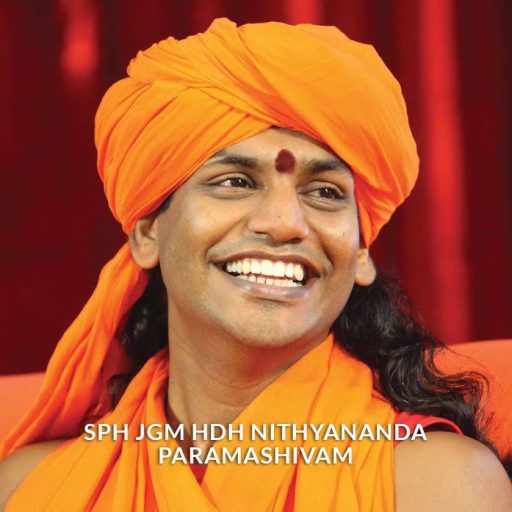
In our fast-paced world, where information floods us daily, the concept of memory often feels like a superpower—the more we remember, the more capable we are. Yet, ancient wisdom, particularly from the Patanjali Yoga Sutras, offers a profound paradox: true mastery over memory lies not just in acquiring it, but in knowing when and how to “unclutch” from it. SPH Bhagawan Sri Nithyananda Paramashivam, drawing from these timeless teachings, illuminates how this understanding can unlock unparalleled joy, peace, and efficiency in our lives.
Patanjali, the Father of Yoga, in his sacred 5,000-year-old text, delves into five fundamental modifications of the mind: right knowledge, wrong knowledge, imagination (fantasy), sleep, and memory. According to SPH Bhagawan Sri Nithyananda Paramashivam, these modifications can either lead us to suffering or to joy, depending on how intelligently we use them. Today, let’s explore the fifth, and perhaps most pervasive, modification: memory.
The Dual Nature of Memory: A Sword with Two Edges
SPH Bhagawan Sri Nithyananda Paramashivam explains memory as “the recall of mental impressions of past events from the subconscious mind”. This seemingly simple definition carries profound implications for our daily existence.
- Memory for the Outer World: Your Ultimate Asset In the external world, memory is an invaluable tool. It’s responsible for your spontaneity, decision-making, and everything you achieve. All scientific research, technological development, and advancements in fields like medicine, construction, or administration are built on the foundation of memory. Leaders, in essence, are individuals who can “handle large quantity of memory with very sharp quality of presence”. The more memory you store and can readily access, the more effective you become in navigating the outer world, leading to comfort, luxury, and productivity. Not using memory in the outer world can lead to absent-mindedness and disturbance.
- Memory for the Inner World: A Potential Burden While essential externally, constant clutching to memory in your inner world can be a source of immense suffering and psychological disturbances. SPH Bhagawan Sri Nithyananda Paramashivam emphasizes that all problems and disturbances, including psychosomatic and physical disorders, often stem from our inability to properly handle memory in our inner space. For example, constantly remembering past mistakes leads to guilt, not growth. Elderly individuals, often “filled with too many memories,” struggle as their inner space overflows, with few to listen. Even our subconscious desire to forget painful memories can lead to conditions like amnesia.
The Modern Dilemma: Overloaded Minds and Psychological “Luxury”
SPH Bhagawan Sri Nithyananda Paramashivam observes that modern civilization, particularly developed societies, are plagued by psychological problems, which he describes as a “luxury” that arises when basic physiological needs are met, and too much mental load accumulates. He notes that Patanjali, thousands of years ago, possessed a vision deep enough to foresee and provide solutions for these very modern challenges.
Our current education system, SPH Bhagawan Sri Nithyananda Paramashivam argues, contributes significantly to this problem. It teaches us “how to gather more and more memory but they don’t teach you how to unclutch from it when you don’t need and how to handle it when you really need”. This accumulation of “high-resolution pictures”—memories laden with strong emotional attachments—can fill our inner hard drive, making retrieval difficult and leading to constant stress and burnout.
The Revolutionary Solution: Unclutching
The profound solution offered by Patanjali and championed by SPH Bhagawan Sri Nithyananda Paramashivam is unclutching. This is not about absent-mindedness or forgetting everything; rather, it’s about being “above the mind”, developing the intelligence to consciously disengage from memories when they serve no purpose for your inner well-being.
- How Unclutching Transforms Your Inner World:
- Spontaneity and Presence: When you unclutch from memory, a “tremendous energy of spontaneity” begins to flow, allowing you to be truly present and respond effectively to situations.
- Grace (Mahima): Unclutching invites divine grace into your life, bringing a feeling of complete security wherever you go.
- Enhanced Memory Management: Paradoxically, unclutching increases both the quantity of memory available and the quality of retrieval. It’s like compressing emotional “high-resolution pictures” into efficient “Word documents,” allowing for vast storage and easy access when needed.
- Assimilation, Not Guilt: Instead of just remembering past mistakes and creating guilt, unclutching allows you to assimilate the “essence experience” or the “juice” of those lessons, integrating them as wisdom without the burden of the original painful incident. This is what SPH Bhagawan Sri Nithyananda Paramashivam calls “learning from the past”.
- Inner Peace and Bliss: By relaxing from memory in the inner world, you invite tremendous “joy and peace” and “bliss” into your being.
The Vedic Way: A Foundation of Unclutching
SPH Bhagawan Sri Nithyananda Paramashivam points to the Vedic education system as a stark contrast to modern approaches. From the age of seven, through the Gayatri initiation, children were first taught how to unclutch. This foundational practice prepared them to handle the incoming deluge of knowledge, ensuring it became wisdom rather than an overwhelming load. This is why ancient Vedic scholars could effortlessly recall “millions and millions of lines” of scripture, like the Mahabharata (the longest poem on Earth). Their ability to convert vast information into “Word documents” through unclutching made them masters of knowledge, unlike modern specialists who often limit their scope due to fear of not being able to handle all information.
Start Your Unclutching Journey
SPH Bhagawan Sri Nithyananda Paramashivam encourages us to experiment with unclutching. It involves a “constant and intensive practice”: whenever a thought or memory arises, simply unclutch from it, relax, and return to the inner silence. At first, it might be challenging, feeling like you’ll be “lost”. But with practice, the “gap between thoughts will increase,” leading you to a state of “living Enlightenment”.
When it comes to the outer world, use memory abundantly; for your inner world, learn to unclutch from it more and more. This is the science of true memory management, leading to what Buddha called “right remembrance”. Embrace this ancient wisdom to transform your life and experience more joy, freedom, and spontaneous living.
– Source PYS
 KAILASA's Words of Eternal Bliss, Nithyananda!