Unclutch from the Mind Maze: The Ancient Key to Instant Destress
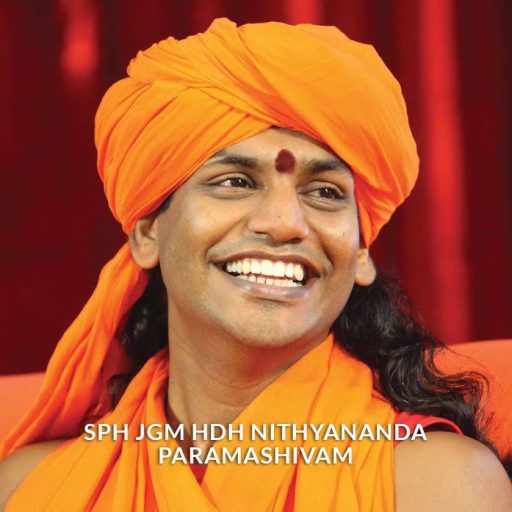
Today, we delve into a profound teaching from the Patanjali Yoga Sutras that promises to revolutionize your life: the eighth Sutra. Bhagawan Sri Nithyananda Paramashivam, the Supreme Pontiff of Hinduism, reveals how this single Sutra offers the complete science of “unclutching from the mind maze” and achieving instant destress.
Patanjali, a revered master, meticulously crafted 199 Sutras, describing the entire science of yoga – the process of uniting individual consciousness with universal consciousness. According to Bhagawan, each Sutra is so powerful that contemplating and internalizing just one can completely transform your way of thinking, acting, and living, igniting new consciousness and energy within your being. In fact, reading too many Sutras without deep contemplation can cause the mind to scatter; the key is to focus deeply on one.
The Root of All Suffering: Wrong Understanding
The eighth Sutra, which Bhagawan interprets as “interpreting based on past conditioning leads to misconception or wrong understanding,” is the very essence of spiritual life. It’s not merely an activity like traditional meditation, but a profound quality of life.
All your fears, greed, worries, and what you perceive as misfortunes or disturbances in life stem from this single problem: wrong understanding, or vritti. As Bhagawan explains, vritti means that every step in your cognitive process is flawed – from how you receive information, to how you internalize, process, and make decisions. It’s a “wrong cognition,” not just wrong knowledge.
Embrace the Present Moment
A crucial insight from the Supreme Pontiff of Hinduism is our constant violence against the present moment. We perpetually judge it through the lens of our past experiences, killing its potential.
- The present moment is your only gateway to eternity. You cannot touch the past or the future, but you can connect with the eternal through the now.
- When we fail to connect with the present and instead torture it with our past, we create misconceptions and wrong understandings. This “abusing the present with the past” is, in essence, hell.
Connecting to Right Knowledge: The Three Levels
To fully grasp the eighth Sutra on “wrong knowledge,” it’s vital to understand its counterpart: the seventh Sutra, which describes “right knowledge” (pramana). Bhagawan beautifully explains that correct knowledge operates on three distinct levels, emphasizing that true understanding is multi-layered:
- Perception Through Senses (Pratyaksha): This is the most primitive level, what you directly see, hear, taste, touch, and smell. If you only operate at this level, even with immense wealth and comforts, life becomes boring and depressed, like having a TV with only one channel.
- Conclusion Arrived at Through Cognition/Inference (Anumana): This is where you infer, calculate, analyze, and develop understanding beyond direct perception. This level gives rise to science, mathematics, art, poetry, and creativity. Those who tap into this become scientists, artists, and creators.
- Words of an Enlightened Master (Agama): This is the highest and most subtle level of knowledge, where one accepts and internalizes the wisdom shared by awakened beings. According to Bhagawan, only highly evolved and intelligent civilizations offer the opportunity to experience this third level.
Bhagawan illustrates these levels with the story of Ramakrishna’s disciple, Vivekananda, testing an iron rod to see if it was Brahman, and the tale of the mad elephant. In the latter, a disciple, hearing “everything is God,” stood in front of a charging elephant, forgetting that the elephant trainer shouting warnings was also “God” and providing crucial guidance (knowledge) at another level.
The Perils of Wrong Knowledge in Daily Life
The Supreme Pontiff of Hinduism vividly demonstrates how wrong understanding manifests:
- Prejudice and Bias: Our judgments about races, religions, or countries often stem from a single negative experience, which we generalize, leading to deep-seated prejudice.
- The Power of Words: Bhagawan stresses that words, even casual comments or rumors, become deeply ingrained beliefs if repeated. He cites Paramahansa Yogananda’s autobiography, where Yogananda’s spoken words, even in jest, manifested physically. Promoting lies or rumors ultimately leads to personal suffering because you start believing your own creations.
- Unnecessary Suffering: Carrying excess anger or lust for situations not directly related to your life (e.g., getting angry about a foreign president you can’t influence) is a form of suffering based on wrong knowledge.
- Relationship Chaos: Many conflicts in relationships arise from pre-conceived notions and imaginary problems, where one prepares for a fight that the other person isn’t even aware of.
- Societal Impact: Bhagawan asserts that if this one teaching of Patanjali were propagated globally, all wars would cease, leading to a peaceful and blissful world.
He shares a poignant example of a priest suffering for days, performing cleansing rituals, not because he physically touched a “non-Brahmin” (which he had done blissfully earlier), but because his conditioned mind, upon hearing the news, created immense suffering. “99.9% of our sufferings are not related to the situation; it is related to the conditioning,” states Bhagawan.
The Ultimate Retirement Plan: Awakening the Third Channel
Bhagawan highlights a critical aspect of life, especially relevant as we age: the need to constantly expand our knowledge. When we fail to do so, we face depression and feel “dead” while still alive.
- Many civilizations only cater to the first two levels of knowledge, offering entertainment for youth and material pursuits, but nothing for those beyond 66 years of age. This leads to a severe global problem of elder suicide, often unreported.
- The ultimate retirement plan, according to Bhagawan Sri Nithyananda Paramashivam, is to awaken the third channel: agama, the connection to the words of enlightened Masters.
- Without this, old age, even with wealth, health, and relationships, can be a “hell” of emptiness and depression because there is nothing left to engage or entertain the deeper being.
- Bhagawan provides compelling examples: his grandfather, who was connected to agama, lived a wonderful old age, while his grandmother, despite immense wealth and family, was stuck in the second level and suffered deep depression. He even suggests that conditions like Alzheimer’s can arise from an unconscious decision to stop thinking when the third dimension isn’t open.
- In India, many Swamis who live to old age remain happy and active because they have opened this third dimension.
The Vedic civilization, Bhagawan explains, is uniquely designed to integrate all three levels of knowledge from childhood, naturally guiding individuals towards agama as they age. This ensures a graceful aging process filled with joy and fulfillment, preventing the depression seen in other societies.
Your Homework for Enlightenment
To internalize this profound truth and begin your journey of “unclutching,” Bhagawan provides a simple yet powerful exercise:
- Sit for 30 minutes to an hour today and write down at least 10 incidents from your life where you came to a wrong conclusion or made a wrong decision due to past conditioning.
- Reflect on how this wrong understanding led to suffering or misconception.
This practice will help you recognize when you are operating from wrong knowledge in the future, empowering you to return to right understanding and make conscious choices.
By moving away from wrong knowledge and embracing right knowledge, you prepare your entire being for a life of expansion, joy, and ultimately, enlightenment. This is the greatest service you can do for yourself and share with your loved ones.
source: PYS
 KAILASA's Words of Eternal Bliss, Nithyananda!