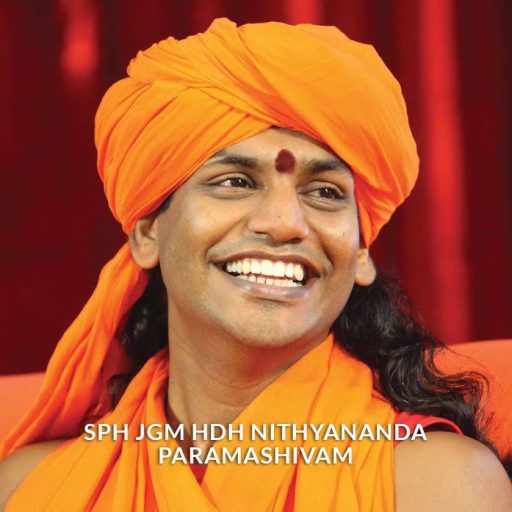
What is Abhyasa?
Abhyasa is defined as “the effort to remain constantly in that elevated state of awareness”. While a loose translation might be “practice,” Bhagawan explains that this word is “too small” to capture its full essence. More accurately, Abhyasa involves “again and again bringing yourself back to that Center, elevating yourself to that higher state of consciousness, centralizing yourself in the truth”. So vital is this concept that Patanjali dedicates minimal words only to the most important concepts, reducing a “full tree to the seed form” in each Sutra, and Abhyasa is clearly one such seed. Bhagawan Sri Nithyananda Paramashivam highlights that for enlightenment, only three things are needed: “Abhyasa, Abhyasa, Abhyasa”.
The Unpredictable Nature of the Mind
To truly grasp the necessity of Abhyasa, one must understand the mind’s non-logical nature. Bhagawan Sri Nithyananda Paramashivam illustrates this with a powerful story of an ashram devotee plagued by the pain of unrequited love. Suddenly, a more pressing “survival issue”—his house being taken by the bank—eclipsed the love problem. The devotee’s mind immediately shifted focus, completely forgetting the prior torment. Once the house problem was resolved, surprisingly, the nagging feeling of unrequited love did not return; his Inner Space was completely at peace.
This demonstrates a profound truth:
- “Problems can wash away problems”. Your ideas about pain, pleasure, joy, love, fear, worry, and greed are not rooted; they are “just floating”.
- The mind is not a logical entity; it’s an “ocean”, and one wave can clear multiple issues.
- Your very “idea about your problems are not right” – they are neither permanent nor impermanent as you perceive them. Often, minor issues can consume your entire Inner Space, making you overlook significant matters.
Bhagawan explains that the mind is not a static “thing” but an “action,” a verb, constantly creating waves. The ultimate goal is to “stop it”—to cease this incessant mental activity.
The Trap of Negative Abhyasa
Our lives are significantly shaped by our practices, both conscious and, more predominantly, unconscious. Bhagawan Sri Nithyananda Paramashivam explains that “all your sufferings are because of your practices”.
- The conscious mind is but one layer; the unconscious layer is nine times larger, and the body itself is “completely unconscious,” built from non-voluntary habits.
- Anything repeatedly done by the conscious mind sinks into the unconscious and eventually becomes part of the body. For instance, driving, which initially requires intense focus, becomes an automatic, unconscious action over time.
- Unfortunately, society often trains us in “unconscious restful awareness”. This involves mastering the art of disengaging consciousness even while awake, often due to a lack of interest, enthusiasm, or connection to what is being taught.
- Anything that makes you unconscious quickly becomes a habit – from drinking and smoking to excessive TV watching and adrenaline-based entertainment like horror movies. This is termed “unconscious abhyasa”.
- The Supreme Pontiff of Hinduism identifies negative abhyasa as the “ultimate conspiracy” against your consciousness and being. Your system naturally resists harmful substances like smoke or drugs, yet society often provides “enthusiastic company” and encouragement for these negative practices, making it easier to fall into them.
Cultivating Positive Abhyasa: The Path to Liberation
The antidote to negative abhyasa is conscious, positive abhyasa.
- When suffering arises, “do not allow the suffering to stay inside you; just decide to entertain yourself in something else” – but not with other sufferings. Shift your energy.
- Positive entertainment, such as participating in temple festivals, singing divine names, or dancing with awareness, constantly reminds and engraves positive ideas into your being.
- “Any idea you strongly remember and move your body that idea will get engraved into your biomemory” and yield results. This is why traditional practices like yoga postures, combined with the strong idea of health, can bring about physical well-being.
A crucial element for cultivating positive abhyasa is the Sangha (spiritual community).
- Bhagawan Sri Nithyananda Paramashivam states, “You are liquid… in which vessel you are kept you take the shape of that vessel”. Therefore, it is vital to “create a positive Blissful Community around you” or spend time in one.
- While a Buddha (enlightened being) can initiate you into truth, and Dharma (spiritual scriptures) can inspire, only Sangha “can bring Abhyasa to you”.
- The collective positive energy, the presence of others living the truth, and even the sacred ambiance of a temple can profoundly influence your biomemory and trigger positive abhyasa, even without explicit instructions. The Master’s love, a simple smile or word, can also break negative apprehensions and help one connect to positive energy.
Abhyasa: Even After Enlightenment
Even after experiencing profound spiritual awakenings, Abhyasa remains essential. Bhagawan shares his own experience of Enlightenment at age 12: it did not immediately “stay” with him because his “brain grooves were not habituated to hold on to that experience”. His negative abhyasa initially led him to believe he was “possessed by a ghost”. It was only by being around his Master, who provided comfort and guidance, that his system began to pick up the courage and create the new “brain grooves” necessary to live that enlightenment continuously.
- Abhyasa is the “ultimate shelter and resort” against the inner “cyclones” of emotions, fears, and disturbances.
- The Supreme Pontiff of Hinduism reveals that “intensity and Abhyasa is the one and only technique” for spiritual progress. All other techniques are merely “different versions” of Abhyasa.
- It requires “again and again” bringing yourself back to that higher state of consciousness, whether through listening to discourses, reading scriptures, meditating, or simply being in the company of the Sangha.
- Continue Abhyasa “till it gets digged drilled inside your body till all the negative abas are broken”.
- This practice enables you to “unclutch” from limiting thoughts and return to the “Jivan Mukta state” (living enlightenment). It becomes a fundamental need, like hunger, where your body itself pulls you back to that elevated state if you stray.
- “The big enemy for Abhyasa is guilt, self-contamination”. Instead of dwelling on guilt when you “slip,” immediately bring yourself back to the positive center. As Bhagawan says, “if you waste your energy by saying I’m slipping I’m slipping I’m slipping you will create guilt if you bring yourself back again and into the center you will create Enlightenment”.
In essence, Abhyasa is the fundamental practice, a continuous effort to remain in an elevated state of awareness. It is the master key, the “one solution” for any problem. Even after enlightenment, it becomes as natural as breathing. So, continually “bring yourself back again and again” to the truth, allowing it to awaken a strong, positive Abhyasa within you, leading you to reside in and live the experience of Jivan Mukti.
source: PYS
 KAILASA's Words of Eternal Bliss, Nithyananda!