The very essence of human consciousness is a relentless pursuit of freedom.
From the desire for wealth, which offers a glimpse of freedom through more choices (even if choices between sufferings), to the pursuit of political, social, or economic liberation, all human energy flows towards what is perceived as freedom. What a civilization or individual considers ultimate freedom dictates where their energy is directed—be it political freedom or the profound inner freedom.
The Cosmic Law of Compassion
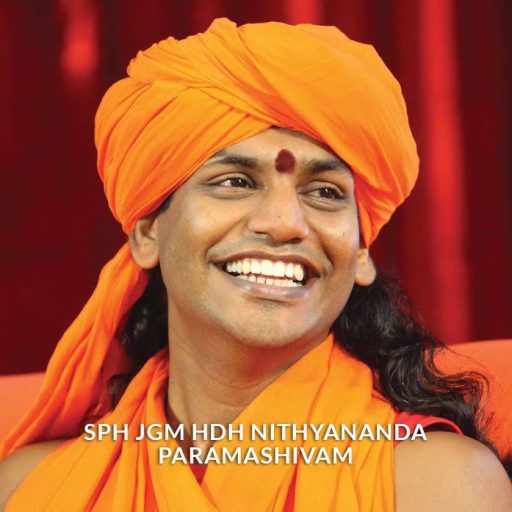
According to Bhagawan Sri Nithyananda Paramashivam, the universe’s very foundation rests on a singular, beautiful truth: “the one became many just to enjoy itself”. This fundamental idea underpins all of creation, making compassion the basic thread of this whole creation. Bhagawan Sri Nithyananda Paramashivam states that compassion is the only commandment from God, the cosmic law, distinguishing it from man-made laws, which are merely understandings between human beings.
This cosmic understanding shapes civilizations:
- Civilizations that embrace the idea that “the one became many just to enjoy itself” are compassion-based and naturally gravitate towards inner freedom and spiritual freedom. In such societies, Buddhas are celebrated as heroes.
- Conversely, civilizations founded on the existentialist thought “the other is hell” or “the other is enemy” tend to focus their efforts on political freedom, believing they cannot be truly free as long as “the other” exists. These civilizations uplift “various” (implied to be those who fought against others) as their heroes.
As an example, Bhagawan Sri Nithyananda Paramashivam points to the Indian civilization, which even for political freedom, trusted a saint like Mahatma Gandhi, a person profoundly established in nonviolence (ahimsa). This highlights that in any crisis, ahimsa and compassion are the best strategy.
True Freedom: An Inner Space, Not a Place
Bhagawan Sri Nithyananda Paramashivam teaches that freedom is not dependent on the place you live in, but rather on the inner space in which you are established. When decisions are made from an inner space “lubricated with deep friendliness, with a deep joy, with a deep compassion,” then you are in real freedom – the ultimate freedom that cannot be taken away by anybody. This profound state is what Bhagawan Sri Nithyananda Paramashivam refers to as enlightenment.
The concept of freedom can be broken down:
- “Freedom from something” is considered the negative aspect of freedom, referring to liberation from bondages, prison, poverty, or inability. While initially celebrated, this “freedom from” is often taken for granted and forgotten if one doesn’t understand “freedom for”.
- “Freedom for something” is the positive aspect, representing freedom to achieve or do something specific. This “freedom for” adds fulfillment to life.
- However, the ultimate true freedom is experienced when one is free from both “freedom from” and “freedom for”.
The Power of Compassion in Crisis: Lessons from Experience
Bhagawan Sri Nithyananda Paramashivam shares His personal experiences, particularly His 53 days in prison, to illustrate the power of compassion and inner freedom. Despite facing immense abuse, disrespect, and “so much of things happening from all corners,” He remained completely relaxed, settled, and never felt abused. He explains that being established in compassion was the one thing that truly saved Him in that situation, making it possible to rest and sleep when it would otherwise be impossible. He emphasizes that freedom from hatred and vengeance is the ultimate freedom.
During this period, Bhagawan Sri Nithyananda Paramashivam observed:
- His name was the “largest Googled searched word” after His “scandal,” causing Internet jamming comparable to Michael Jackson’s death. Yet, He never felt connected to that name or any name or form, which allowed Him to remain unbothered.
- Even in the “innermost core of [His] heart, there was no secret plans to take revenge on anybody,” leading to a completely peaceful and at-ease existence.
- He realized that compassion is the best ultimate strategy for life in any crisis. He boldly states that one will “never have worse crisis than what [He] faced in this last 3 months in your life”. This provides immense courage to handle any situation with compassion.
Mystical Experiences and the Purpose of Incarnation
While in prison, Bhagawan Sri Nithyananda Paramashivam describes a profound mystical experience where His body was resting in samadhi, yet His consciousness was actively attending to “thousands of calls” – prayers, requests, and meditations from around the world. These requests were automatically responded to by an energy using His “biomemory”. He realized that the name or form used by a person praying does not matter; the intensity with which they call matters. He also understood that His biomemory specializes in healing and transmitting the enlightenment experience, while other Masters like Mahavatar Babaji specialize in different areas, such as longevity.
This experience led to a profound realization: He could do what He cherishes and enjoys without even the necessity of His physical body, confirming this as the ultimate freedom. However, He discerned that His body is still kept alive for many new people to develop viveka (deep trust), as those already receiving responses were already established in trust. Furthermore, being established in ahimsa allows one to experience joys (like taste) even without a physical body, which is described as heaven.
Overcoming Hatred and Vengeance: A Practical Process
Bhagawan Sri Nithyananda Paramashivam offers a practical process to attain this freedom from hatred and vengeance:
- Call all those you accuse into your inner space.
- Logically reason if taking revenge on them will truly fulfill your life. He states that revenge is a diversion and waste of life energy that ultimately leaves you feeling empty.
- Understand that any emotion, including hatred and vengeance, can be nullified by reasoning with it logically seven times continuously. As Bhagawan Sri Nithyananda Paramashivam wisely puts it, “blood cannot wash blood,” and “if we go on doing I for an eye, whole world will become blind”.
- Acquit them with honor. By doing so, without judging anyone, you begin to experience the quality of God, becoming a “cosmic judge”.
- Try it, even for a few seconds. Do not let past failures with other techniques deter you. Just for a few moments, experience the space where you carry no secret plans for revenge, no anger, no hatred. This brief experience can unlock an “extraordinary Freedom which is immeasurable”.
Religious Persecution and the Devotees’ Response
Supreme Pontiff of Hinduism expressed deep sympathy and empathy for His devotees who faced severe religious persecution during the crisis. He described physical and psychological torture, including attacks on ashrams, beatings, burning, and even children being unable to attend school with their religious symbols. He defines religious persecution as being “attacked physically or mentally tortured physically or psychologically for the sake of what he or she believes”.
Despite this intense persecution, Supreme Pontiff of Hinduism expressed immense pride that His entire mission, being established in compassion, did not retaliate. He requested His followers to “be silent and compassionate, do not retaliate,” and millions of devotees and sympathizers upheld this, with not “a single one did anything illegal or antisocial”.
A Father’s Blessing: The Ultimate Liberation for Disciples
Drawing an analogy from a story of a father liberating his son from any future obligation after being fulfilled by him, Bhagawan Sri Nithyananda Paramashivam declared that His disciples who handled the entire sensational crisis non-violently, compassionately, and without being shaken have given Him the ultimate fulfillment. He states, “I don’t need anything more from you, I liberate you completely”. He likens the crisis to a “cyclone” that caused many “flowers” (less committed individuals) to drop, but those “strongly connected to the root” (true disciples) remained and became “fruit”.
Living Enlightenment
Bhagawan Sri Nithyananda Paramashivam invites everyone to come and experience this “Living Enlightenment Series,” emphasizing that this is the best time to be around Him and to “live and radiate Enlightenment”. He blesses all to experience the ultimate freedom and radiate eternal bliss.
source: Nithyananda speaks on Freedom
 KAILASA's Words of Eternal Bliss, Nithyananda!