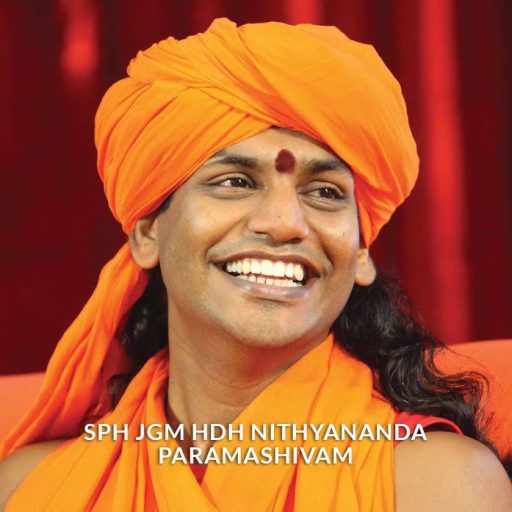
You might wonder, with so much spiritual material available, why do enlightened Masters continue to speak and write extensively? Bhagawan explains that the primary reason is to constantly inspire you to practice. Our senses are naturally outward-looking, making it challenging to consistently turn inward towards our source. We tend to forget or not fully absorb truths, necessitating repetition in various forms and languages. Just as Buddha taught for 40 years, repeating the same truths because people hadn’t truly heard them, modern Masters like Bhagawan Sri Nithyananda continue to share profound wisdom daily, with thousands of hours of discourses recorded to continuously remind human beings to “look in, turn in, live Enlightenment”.
Patanjali, however, stands out among masters. He is not repeating ideas again and again because in this one Sutra, he clearly explains why repetition is needed, thereby respecting the seeker’s intelligence and moving beyond constant reiteration.
The True Meaning of “Long Time” in Practice
The Sutra’s phrase “long time” (Sanskrit: deergha kala) is often misunderstood. Many interpret it chronologically, believing they must practice for a specific number of years, like 10, 20, or even 100. However, Bhagawan clarifies that Patanjali is not interested in such a literal, horizontal understanding of time.
The key insight is this: Time is psychological. Our perception of time changes dramatically based on our state of awareness. A restless mind can make a half-hour meditation feel like ten days, while a mind in high awareness can experience a day as an hour.
- The Mind’s Game: Your mind is an “accountant” that thrives on change and hope for the future. If you set a time limit for your practice (e.g., “I’ll meditate for 2 hours” or “I’ll practice for 12 years”), your mind will simply wait for that end point, preventing you from being fully present. It will continually postpone, play games, and cheat you.
- The “Forever” Decision: When Patanjali says “long time,” he means deciding to practice forever or eternally. This strong, unwavering decision eliminates the mind’s hope for an end or a change.
- The Paradoxical Outcome: The moment you firmly decide to practice unclutching forever, your mind loses its future goal and falls back into the present moment. In this very moment, the practice of unclutching effectively ends, and you become unclutched. This is precisely what happened to Buddha: after 12 years of meditation with no results, he decided to sit “forever,” and immediately became enlightened.
Unclutching: The Ultimate Technique
Unclutching is described as the ultimate technique for enlightenment. It means continuously unclutching from whatever is happening inside you, including the five modifications of the mind: right knowledge, wrong knowledge, imagination, sleep, and memory. This practice, when approached with the decision of eternity, leads to a profound internal transformation—a “psychological death” of the mind.
Bhagawan Sri Nithyananda shares his own powerful experience in the Varanasi burial grounds (Manikarnika Ghat), where he meditated on death for days. He realized that despite meditating on death, he hadn’t experienced the internal, psychological death required for enlightenment. It was when he made the strong decision to sit and meditate until he experienced that internal death, without any time limit or possibility of stopping, that his mind, which had previously resisted, finally became convinced of his will. This conviction led to the disappearance of the mind’s resistance and the experience of psychological death.
Practice is the Only Shortcut
Bhagawan emphasizes that spiritual knowledge is unique; it only yields benefit when practiced and lived. There are no shortcuts other than “practice, practice, practice”. Unlike the outer world where “seniority” might mean less effort (like a senior partner at a firm who doesn’t have to do much actual work), in the inner world, everyone, regardless of their status, must continue to practice eternally.
When you adopt this singular truth and decide from this very moment that you will continuously unclutch, no matter what happens – whether walking, talking, sleeping, or dreaming – you bring a clarity that robs negativity, depression, and fear of their power over you. Your mind, realizing there’s no escape or end, will settle all its “accounts” and cease its games, leading to a state of being firmly established in a higher state of awareness.
This profound decision is not merely a step in practice; it is the very decision that unclutches you, paving the way for living enlightenment.
source: PYS
 KAILASA's Words of Eternal Bliss, Nithyananda!