The Characteristics of Sampragnatha Samadhi
The journey of human life is inherently geared towards an “Ultimate Experience,” often referred to as Samadhi. Every experience, from eating to sleeping, is processed by our bodies and minds, which are “hardwired” for this ultimate state of being. All authentic spiritual literatures are dedicated to guiding humanity towards this profound experience. The Patanjali Yoga Sutras, in particular, are described as independently intelligent, capable of leading an individual directly to the highest conscious experience for which they are created.
The 17th Sutra describes the characteristics of Sampragnatha Samadhi as reasoning, contemplation, blissful flowering, and the state of pure awareness. These four elements, working together or individually, lead to this initial level of Samadhi, which is akin to what Zen traditions call satori.
Understanding Vitarka, Kutarka, and Viveka
To truly grasp this path, it’s crucial to understand three types of logic:
- Vitarka: Simple logic.
- Kutarka: Negating logic, characterized by constant negation and a tendency to put people down. It often leads to depression or ill-feeling and a narrow, short-sighted view. People with Kutarka struggle to agree with anything or anyone and constantly shrink. Kutarka always looks outside for fault, never within. It’s described as a “hole” in the ship of civilization that leads to drowning.
- Viveka: Right reasoning, which transcends both simple and negating logic. It is the way of thinking that leads you to your peak potential and a deep, relaxed state of peace. When one operates with Viveka, they begin to say “yes” to everything, radiating a deep sense of affirmation throughout their being. Viveka is described as trust combined with positive energy and logic.
The Transformative Power of Shraddha (Trust)
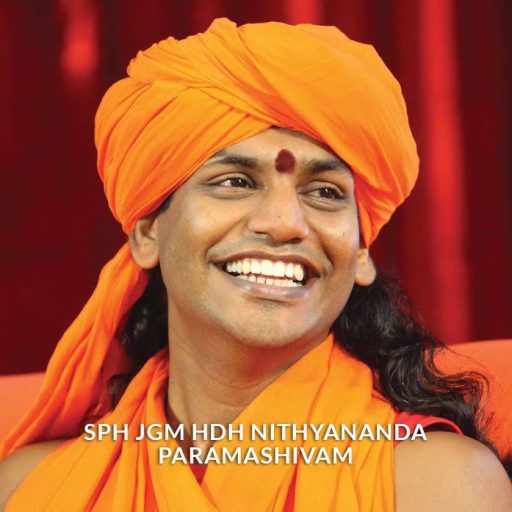
Bhagawan Sri Nithyananda Paramashivam recounts a profound personal experience to illustrate the shift from Kutarka to Viveka through Shraddha (trust). As a young boy, he was deeply inspired by the story of Saint Nandanar Nambi, who, driven by immense Shraddha, made Ganesha appear and eat food.
Inspired by this, Bhagawan Sri Nithyananda Paramashivam attempted to feed his own Ganesha idol. His initial approach was based on:
- Vitarka: Simple logic – “if he made Ganesha eat, why not me?”.
- Kutarka: He then applied the “negating logic” he observed in his grandmother, threatening the Ganesha idol with punishment (putting it in a well) and blaming external factors like the food or his mother’s cooking when Ganesha didn’t eat. He admits that with Kutarka, he projected his own fears and greed onto Ganesha, thinking Ganesha would also suffer from them.
However, the inherent power of Shraddha (trust) intervened. Despite starting with wrong logic, the deep trust transformed his approach. A “strong click” occurred where he realized, like Saint Nandanar Nambi, he needed to find fault within himself, not with Ganesha or external circumstances. This turning inwards was the emergence of Viveka, the right reasoning. With this internal shift, the “loaded gun” of his trust was “triggered” by the right reasoning.
Subsequently, Bhagawan Sri Nithyananda Paramashivam decided to fast until Ganesha ate the food. After three days of steadfast determination, an “explosion happened” – he clearly saw Ganesha sitting in front of him and eating, and the food had physically disappeared. This deeply personal experience led to a strong trust and an “extraordinary ecstasy,” which he identifies as the prasada (blessings) from the Lord. This experience is an example of Sampragnata Samadhi, a spiritual experience with the form of a deity or existence itself, where all other thoughts disappear. He emphasizes that a constant meditative connection (Leela Smarana) with the Divine, as he had with Ganesha, builds Viveka and leads to Sampragnata Samadhi.
The Civilization Built on Viveka
The Supreme Pontiff of Hinduism asserts that the ancient Indian civilization was fundamentally built upon Viveka. The ability to believe in deities, Puranas, and Vedic traditions as living realities—not just symbols—allowed for a profound connection to cosmic energies. This right reasoning enabled the creation of architectural marvels like temples, which required millions of inspired people working for generations, experiencing the truth for which they labored. This fostered a civilization capable of creating and expressing miracles, and balancing the collective negativity of humanity.
However, Bhagawan warns that the worst thing to happen to Indian civilization was the infiltration of Kutarka—losing faith and trust in their own traditions and Puranas. This loss is not just a danger for India but for the entire planet, as it undermines a civilization that channeled immense energy into spiritual masters and positive spiritual energy. He urges a reawakening, a reclamation of Viveka, to regain this lost heritage.
The Path to Samadhi: Viveka and Vichara
The 17th Sutra highlights two complementary paths to Sampragnata Samadhi:
- Viveka (Right Reasoning): This is a 24-hour lifestyle of constantly mending one’s reasoning to ensure thoughts lead to peak potential and deep peace. If your logic consistently leads to bliss (Ananda), you are in Viveka. This path directly leads to Ananda, blissful flowering. Internalizing truths like “nothing can be taken away from me” and “I give refuge to all beings” helps cultivate Viveka and drops fear and anxiety.
- Vichara (Contemplation): This is a specific technique practiced by sitting with closed eyes for half an hour or an hour. Vichara, by simply “looking in” without doing anything else, leads to Asmita, pure awareness, a state of pure “amness” or existence.
For complete Sampragnata Samadhi—the integration of blissful flowering (Ananda) and pure awareness (Asmita)—Bhagawan emphasizes the importance of practicing both Viveka (as a lifestyle) and Vichara (as a meditative technique).
Conclusion:
By cultivating Viveka, the right reasoning that leads to bliss, and engaging in Vichara, the contemplation that leads to pure awareness, individuals can achieve Sampragnata Samadhi. This profound state is not merely an ancient concept but a living truth, accessible through conscious effort and a deep, unshakeable trust. It is a call to awaken to our inherent potential and reclaim the spiritual strength that leads to living enlightenment and eternal bliss.
source: PYS

