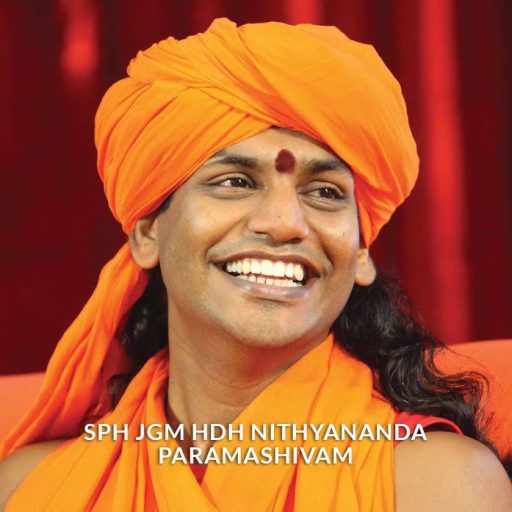
Category: Spirituality
-
Krishna Janmashtami: Celebrating Life and Spirituality
On this auspicious Krishna Janmashtami, we celebrate Sri Krishna as the ultimate manifestation of Paramatma, Parandhama, Parabrahma. He is a complete manifestation of the ultimate supreme. He is beyond any words can describe; any word you try to describe him will be lower than his existence. No word can truly describe him. All the anashas…
-
What is Unclutching?

Unclutching is the direct practice of disengaging from the continuous chain of thoughts and resting in the gap between them — the pure awareness that is always present. It is a a very powerful and practical concept from modern Advaita and yogic teachings taught by Supreme Pontiff of Hinduism, Bhagawan Sri Nithyananda Paramashivam. Let’s explore…
-
Understanding conflict has no life and life has no conflict, leads to living beyond conflict-filled life.
Unpacking the Sutra: Conflict-Free Life Today this is the subject. Conflict free life. And the Sutra is all about conflict free life. I am telling you honestly, don’t think I am putting my meaning into it. Really the Sutra fell in such a way today this became a Sutra. Don’t think I have some idea…
-
Going through the whole persecution, being established in Ishwara Pranidhana, and showing to the world the power of Vidya Ahankara is the purpose of my Incarnation
Tapa Swadhyaya Ishwara Prana Dhana. If you want immediate solution and ultimate solution, Patanjali is the solution. Sadhana, the method of understanding your immediate problem and going for immediate solution is described so thoroughly, so beautifully in this whole chapter. I can say again and again, I use same word, it can come, Patanjali fulfill…
-
Understanding Yogaha Chitta Vritti Nirodhaha – Patanjali Yoga Sutras
What is Mind? When one reads the sutra yogaha chitta vritti nirodhah, it is commonly interpreted as “yoga is stopping the mind work”. A teacher might then provide techniques to stop the mind, leading to a lifelong struggle, often ending in frustration and a loss of confidence. However, a master is a person who straight…
-
Do not learn Great Truths from a person who has not experienced Consciousness
Patanjali’s Scientific Approach to Enlightenment Patanjali is one of the rare happenings, the first master who quantified the unquantifiable, who made Enlightenment as a science. Till Patanjali, Enlightenment was taken more as a miracle or as an accident. It is Patanjali who made that more as a science and defined it along with the yoga…
-
Yoga Chitta Vritti Nirodhah: Beyond Stopping the Mind
Patañjali is one of the rare happenings – the first master who quantified the unquantifiable, who made Enlightenment as a science. Till Patañjali, Enlightenment was taken more as a miracle or as an accident. It is Patañjali who made that more as a science and defined it along with the Yoga Sutras. Validating Ancient Wisdom:…
-
The Ultimate Freedom: An Exploration of Compassion and Inner Liberation
The very essence of human consciousness is a relentless pursuit of freedom. From the desire for wealth, which offers a glimpse of freedom through more choices (even if choices between sufferings), to the pursuit of political, social, or economic liberation, all human energy flows towards what is perceived as freedom. What a civilization or individual…
-
Beyond Enlightenment: Why Intensity is Your Ultimate Spiritual Secret – 21st and 22nd Patanjali Yoga Sutras
Enlightenment: A Continuous Happening, Not a Destination Many people mistakenly perceive Enlightenment as a singular event, a final destination. However, as Bhagawan Sri Nithyananda Paramashivam reveals, Enlightenment is not a noun; it is a verb. It is a continuous, intense happening, better understood as “enlightening”. While ultimate, it is not final, unfolding moment by moment…
-
Abhyasa: The Master Key to an Elevated Existence
What is Abhyasa? Abhyasa is defined as “the effort to remain constantly in that elevated state of awareness”. While a loose translation might be “practice,” Bhagawan explains that this word is “too small” to capture its full essence. More accurately, Abhyasa involves “again and again bringing yourself back to that Center, elevating yourself to that…
-
Whenever something is lost, your identity will be lost because your identity is build on these pillars

You see, the fear of losing identity is such even if you try to hold on, you can’t hold on. You understand? If it can stay, I have no problem. Have it. I don’t want to take it away but it won’t stay even if you try to hold on, after sometime maybe at the…
-
What exactly do you mean by saying, bhooloka is a less intense projection, and hell and heaven are little higher-level projection? Does it mean that it is more easy to find that bhooloka is a projection?
The possibility for disillusionment and experiencing the other extremes is more easy in Bhooloka. In Bhooloka you can extremely experience the pain and the opposite extreme of the pain, pleasure, very easily without difficulty. But in hell you can never experience pleasure; in heaven you can never experience pain. When the opposite extremes are not…
 KAILASA's Words of Eternal Bliss, Nithyananda!